How major cannabis companies are selling weed as hemp and leaving customers to face the consequences.
Table of Contents
Picture this: You walk into what looks like a dispensary. Glass cases. Professional budtenders. Fancy branded leather aprons. Eighth jars lined up like a legal cannabis shop. Even rosin in the fridge. You buy some “hemp” pre-rolls, drive home, and get pulled over.
The cop smells cannabis. Sees what looks like weed. Arrests you for possession.
Your protests about “hemp” and “farm bill compliance” fall on deaf ears. You’re booked into county jail. The corporation that sold you those pre-rolls is counting their profits from a product they marketed as federally legal.
This isn’t hypothetical. This is happening right now, across America, as major cannabis companies flood the market with THC products disguised as hemp. And the cop who arrested you? He wasn’t wrong. It is weed.
The Biology They Don’t Want You to Think About
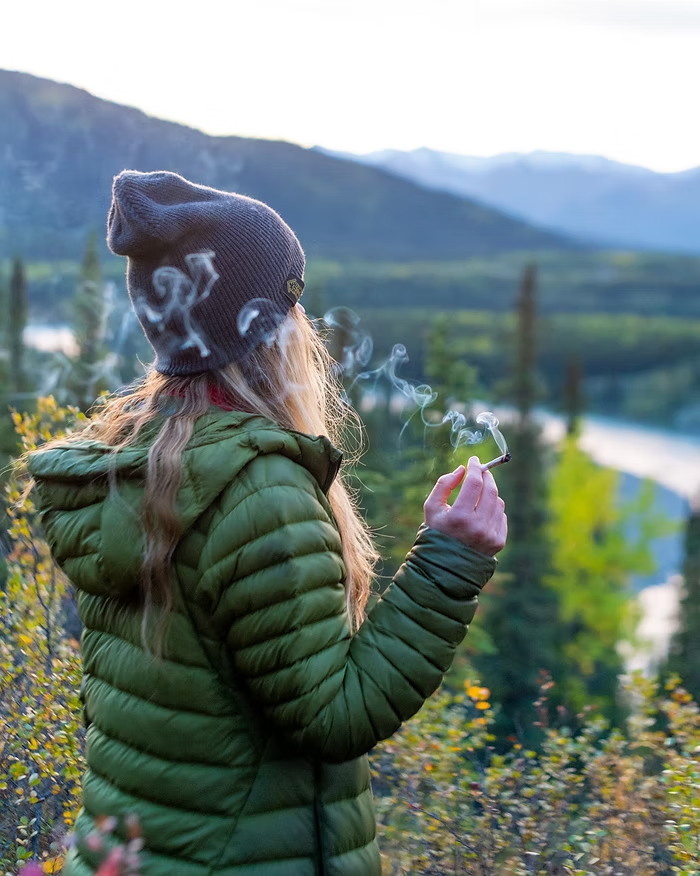
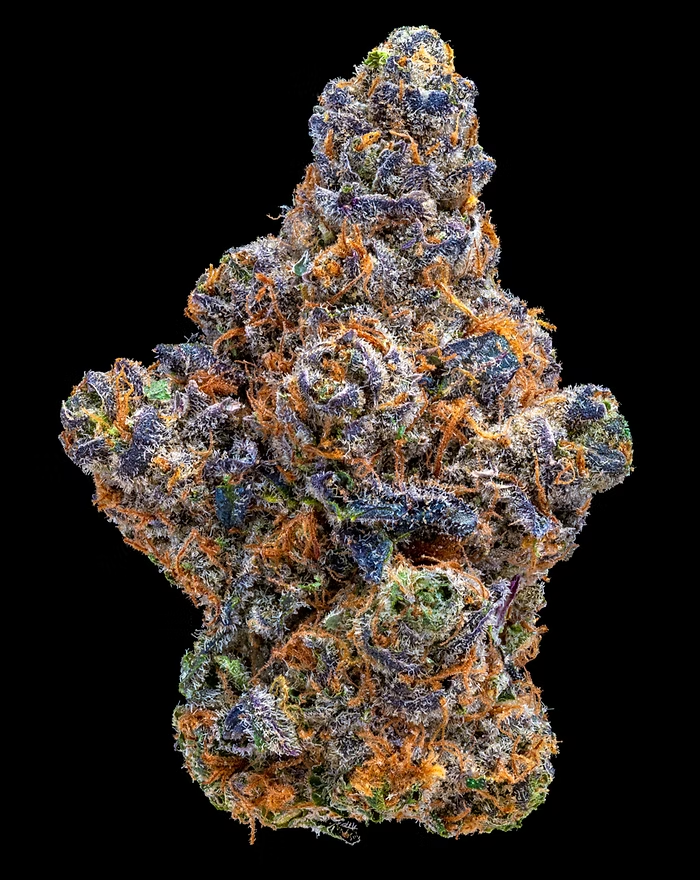
Here’s what the industry doesn’t want you dwelling on: “hemp” and “marijuana” are identical plants. Same species: Cannabis sativa. Same smell. Same appearance. Same everything—except for one laboratory-measured variable.
The 0.3% Delta-9 THC threshold that separates “legal hemp” from “illegal marijuana” is an arbitrary regulatory line that exists nowhere in nature. A hemp plant at 0.29% THC is federally legal. The genetically identical plant next to it testing at 0.31%? A controlled substance.
It gets more absurd with THCA products. THCA is just THC before it’s heated—light it on fire or vaporize it, and THCA instantly converts. Yet because federal regulations only measure Delta-9 THC in its activated form, companies can sell flower loaded with 20% THCA and call it “hemp” as long as the Delta-9 tests under 0.3%. You can legally buy a joint that becomes 20% THC the moment you light it, classified as hemp because of how the government measures molecules in a lab.
To a police officer at a traffic stop, there’s no discernible difference. The smell is identical. The plant structure looks the same. Even field testing can’t reliably distinguish between legal hemp flower and illegal cannabis. Major cannabis companies understand this biological reality perfectly. They know they’re selling products that are functionally indistinguishable from regulated cannabis to anyone without laboratory equipment.
When “Compliant” Doesn’t Mean Safe
I learned this lesson firsthand in 2020. Driving through California—a state where cannabis had been legal for years—I was pulled over by federal agents who’d spotted my van at a farm. What they found? Clearly labeled hemp products from Pennsylvania. Real hemp. CBD flower with proper USDA compliance documentation.
Didn’t matter. The agents saw cannabis-looking products, smelled cannabis, and hit me with possession charges. The fact that the USDA—the same federal agency that runs the US Forest Service—actually regulated these products meant nothing in that moment. I fought the charges and won, but not before experiencing firsthand how the legal theory of hemp compliance crashes into the practical reality of law enforcement.
If legitimate, properly labeled hemp products caused problems in California, what happens when someone gets caught with Curaleaf’s “hemp” eighths in rural North Carolina?
The Corporate Shell Game
Here’s what’s really happening: major cannabis operators have discovered they can sell functionally identical cannabis products without the crushing overhead of proper regulation. Legal cannabis demands years of licensing, seed-to-sale tracking, individual plant tagging, weighing everything, compliance teams, legal departments, and 280E tax burdens that crater margins.
Hemp? Fewer regulations. No medical program restrictions. Any adult is a potential customer. It’s why you see brands like Curaleaf closing dispensaries just to reopen “hemp stores” carrying identical product lines.
The hypocrisy is staggering. When these same companies operate in regulated cannabis states, they spend millions ensuring customer protection—lab testing for pesticides, heavy metals, and potency. But in the hemp market, they’ll gladly sell you something that could get you arrested, then shrug and say you understood the risks.
The Testing Smokescreen
Industry defenders will point to certificates of analysis and hemp compliance testing. But hemp compliance testing focuses on one thing: keeping Delta-9 under 0.3%. That is completely different from cannabis product safety testing, which screens for pesticides, heavy metals, residual solvents, and microbials. Many of these hemp products undergo minimal safety testing compared to regulated cannabis products.
I experienced this firsthand when I stopped at a glass-front “Cannabis Dispensary” in North Carolina to do some market research. The budtender recommended a “rosin” pen with legitimate COAs. It contained straight distillate. Not only are these operations selling cannabis as hemp—they’re mislabeling products entirely. Consumers face legal risk and may not even be getting what’s advertised on the label.
The Path Forward
This isn’t an argument against hemp or legalization. It’s a call for corporate accountability in an industry that claims to prioritize consumer welfare. If major cannabis companies want to operate in the hemp space, they should extend the same protections to hemp customers that they provide in regulated markets: safety testing, clear risk disclosure, advocacy for consistent regulations, and support for enforcement education.
Most importantly, it means acknowledging that “technically legal” isn’t the same as “safe for consumers” when real people face real consequences for purchasing your products.
Know Your Risks
Until regulations catch up with market realities, consumers need to understand what they’re buying. For many in prohibition states, these hemp shops represent the only accessible alternative to street dealers. But unless you’re in a fully legal cannabis state, you’re potentially purchasing products that could result in arrest, prosecution, and criminal conviction.
The corporations selling these products have teams of lawyers protecting them. You don’t.
Cannabis prohibition is ending, but it’s not over yet. Don’t let profit-focused companies convince you otherwise.
RELATED READING
Cannabis Wise Guys provides technical expertise and honest guidance to commercial cannabis operations. When we say we’ve learned the hard way, we mean it.